

Last Updated: November 19, 2026
Quick Summary
To compare Anthurium hybrid plants, start with the parentage label, then score each plant on leaf shape, size, texture, venation and petiole habit using the same scale. Confirm whether the plant is seed-grown or cloned, and compare juveniles only with juveniles because leaf traits change as the plant matures.
- Read the parentage label first, since the cross shapes what the plant can become.
- Score each plant from one to five on leaf shape, size, texture, venation and petiole habit.
- Seed-grown plants vary between individuals, while clones match the plant they came from.
- Compare juveniles with juveniles, because leaves often grow larger and change shape with age.
- Wait for a new leaf to harden off before judging its final colour against another plant.
Table of Contents
- Why Comparing Anthurium Hybrids Is Harder Than It Looks
- Anthurium Hybrid Identification: Reading the Parentage Label
- A Side-by-Side Framework for Leaf Shape, Size and Venation
- Anthurium Growth Stages: Why a Juvenile Is Not a Smaller Adult
- Anthurium Hybrid Care: What Changes Between Hybrids and Their Parents
- A Buyer's Checklist for Hybrid Health and Appearance
- Choosing Your Next Anthurium Hybrid
- Frequently Asked Questions
Why Comparing Anthurium Hybrids Is Harder Than It Looks
Comparing Anthurium hybrid plants is harder than comparing most houseplants. A listing photo shows one plant at one moment, and a young hybrid can look very different once it matures. Buyers often find this difficult, so this guide sets out a practical way to compare hybrids before you spend your money.
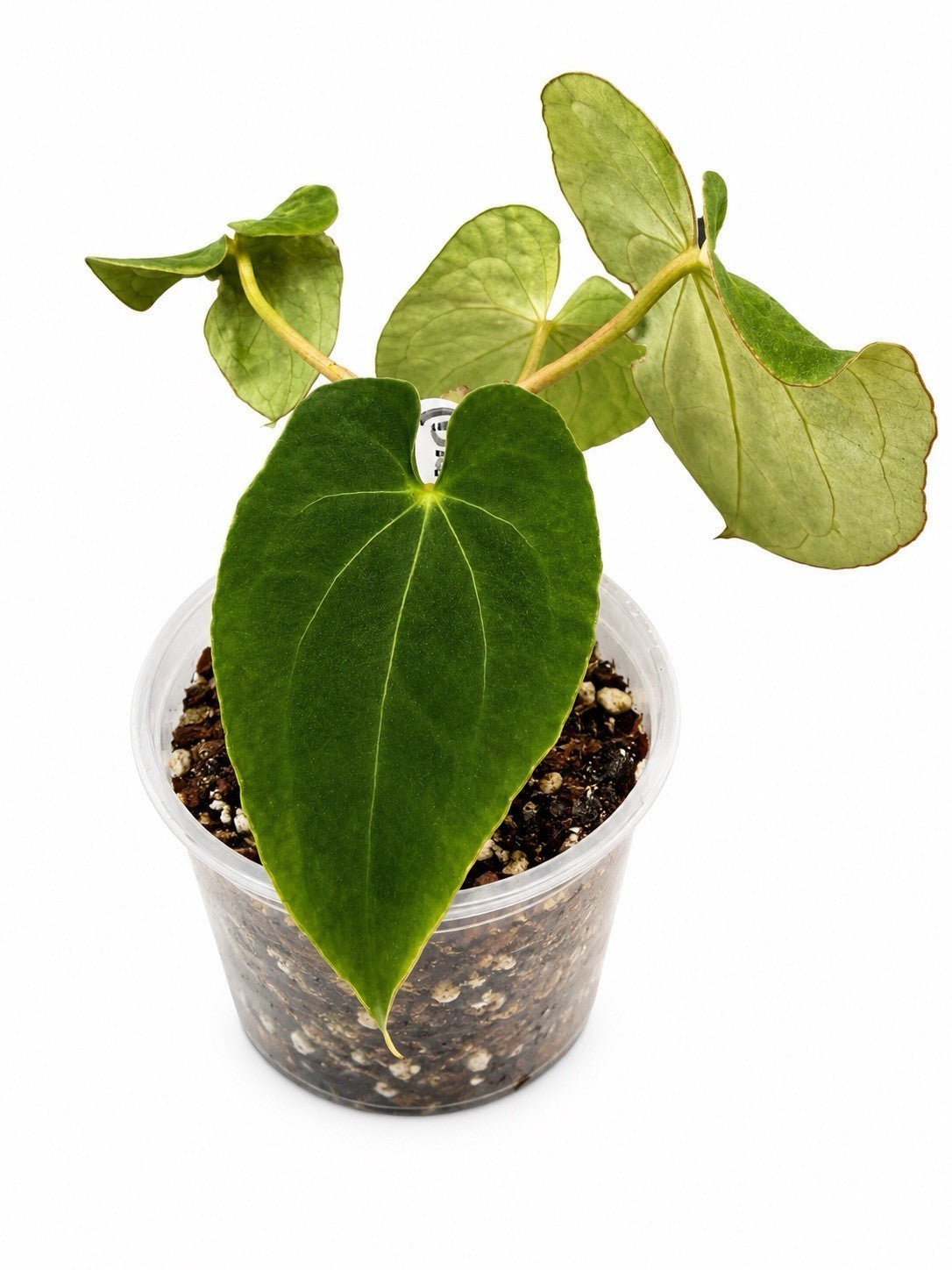
The key is to separate what you can verify from what you can only expect. Parentage, plant size, leaf shape and growth stage are all things you can check. Future colour and venation are not guaranteed, and a good seller will tell you so.
Anthurium Hybrid Identification: Reading the Parentage Label
Parentage is the first thing to read on any listing. A hybrid's name records the cross that produced it, and that cross shapes what the plant can become.
What a Hybrid Name Tells You
A name such as "Black Venom × Pap" shows two parent lines joined by a cross. Each parent contributes traits, so the label gives you a starting point for leaf shape, colour and vein pattern.
Some names include more than two parents or use breeder shorthand. Keep the label as the original grower wrote it rather than expanding or changing it. If a listing gives a cross but no photo of the parents, treat the parentage as the only certain detail and judge the rest from the plant pictured.
Seed-Grown Plants and Clones
Seed-grown plants are individuals. Two seedlings from the same cross can look quite different, so a photo of a parent plant is only a guide. Read how seed-grown Anthurium hybrids are collected to see what that means for your plant. Clones are genetically the same as the plant they came from, which makes their appearance more predictable, but they still change with age and conditions.
When you compare two listings, check whether each plant is seed-grown or cloned. That single detail tells you how closely the plant you receive will match the photos.
A Side-by-Side Framework for Leaf Shape, Size and Venation
Use the same checks for every plant you compare, and score each one on the same scale so the results are fair. The aim is to separate what the plant's genetics are likely to fix from what the grower's conditions have shaped.
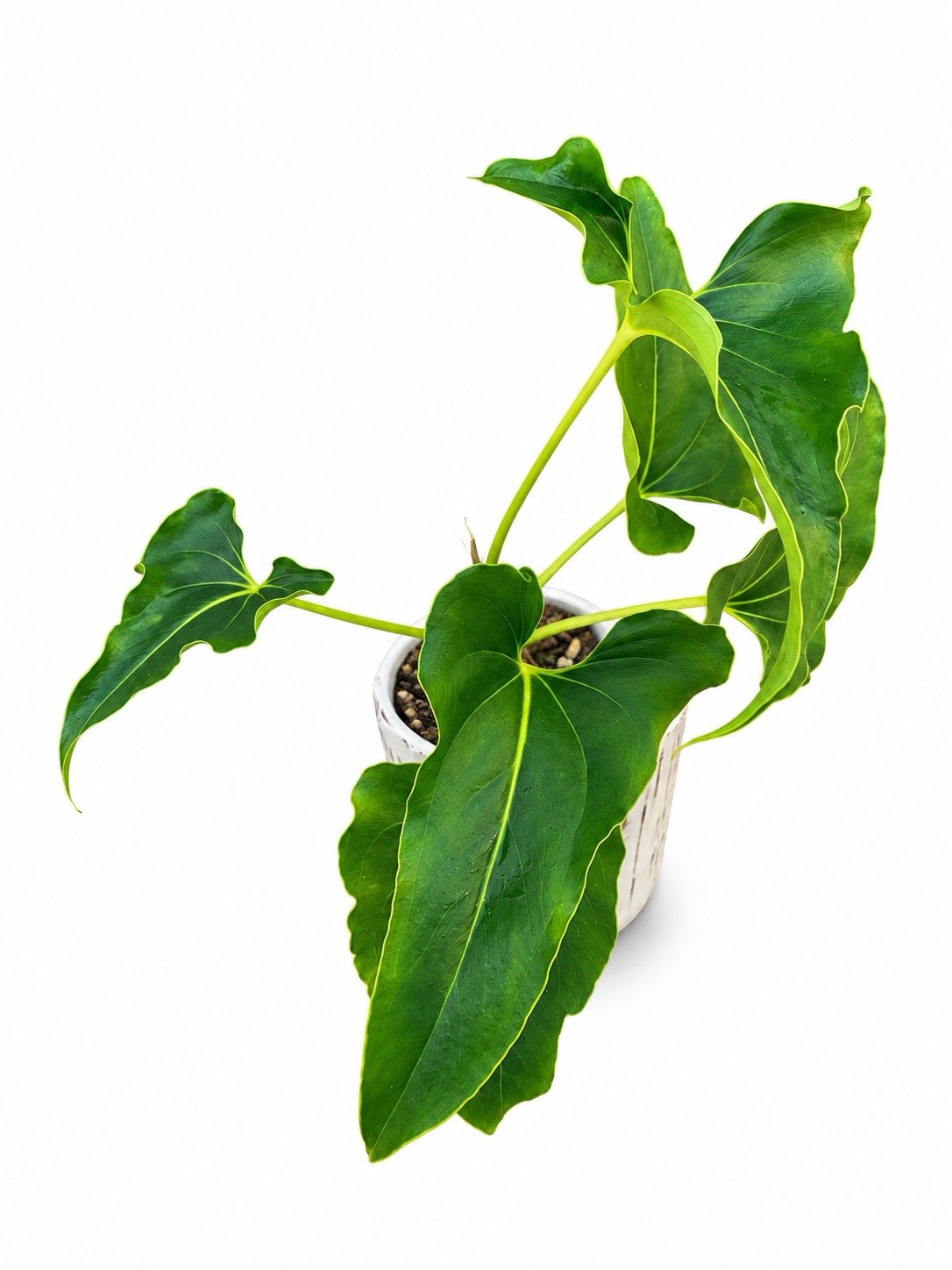
- Leaf shape: Is the leaf elongated, heart-shaped or somewhere between? Note the overall outline and the tip. A narrow, tapering tip often points to one parent line, while a broad, rounded blade points to another.
- Leaf size: Compare the length and width of the largest mature leaf visible in the photos, not the newest unfurling leaf. Ask for the measurement in centimetres if the listing does not state it.
- Texture: Is the surface velvety, glossy or matte? Velvet comes from tiny surface hairs and is usually a stable trait, while gloss can shift with light and leaf age.
- Venation: How strong and how contrasting are the veins against the leaf colour? Note whether the veins are raised, flush or sunken, and whether the contrast runs to the leaf edge or fades near the margin.
- Petiole and growth habit: Note the petiole colour, length and whether the plant is self-heading or climbing. This is often the quickest way to see which parent is dominant.
Score each trait from one to five, where one is weak or absent and five is strong or pronounced. For an established example with distinctive veining to compare against, look at the Anthurium feerense Crisped. Write the scores in a simple table for each plant. This makes differences obvious, and it stops a striking photo from pulling your decision in one direction.
| Trait | What to look for | Why it matters |
|---|---|---|
| Leaf shape | Elongated, heart-shaped, or in between; note the tip | Shows the parent influence |
| Leaf size | Largest mature leaf, measured in centimetres | Indicates current and future scale |
| Texture | Velvety, glossy or matte | Affects the plant's look in person |
| Venation | Strength, contrast, raised or sunken | The most variable trait across seedlings |
| Petiole and habit | Colour, length, self-heading or climbing | Often reveals the dominant parent |
Provenance check: Before you score anything, confirm what the listing actually claims. A cross name is only as reliable as the seller's record-keeping. Ask whether the plant was grown from seed by the seller, whether the cross was made deliberately or open-pollinated, and whether the tag matches the listing. If the seller cannot say which parent was the seed parent and which was the pollen parent, treat the parentage as indicative rather than certain. A common pattern is that open-pollinated seedlings are sold under a cross name even though only one parent is known for sure.
Separating genetics from environment: Two seedlings from the same cross can look different because of their genes, but they can also look different because one was grown under brighter light or in a cooler room. Before you credit a trait to parentage, check whether the seller describes the growing conditions. A plant grown under strong light often shows tighter internodes and deeper colour than a sibling grown in shade. If the listing gives no conditions, score the trait but mark it as uncertain.
Watch out: A plant photographed close up can look larger than it is. Check the scale against the pot or a reference object in the listing photos, and ask for a measurement rather than estimating from the image.
Anthurium Growth Stages: Why a Juvenile Is Not a Smaller Adult
A juvenile plant is not simply a small version of the adult. As an Anthurium grows, its leaves tend to increase in size, thicken in texture and change in shape, and the vein pattern often becomes more pronounced. Colour can also shift, especially in dark-foliage lines, where new leaves may emerge bronze or red before settling into green or near-black. This is normal development, not a sign that the plant is a different hybrid.
Compare juveniles with juveniles, and mature plants with mature plants, when you use the framework above. A young seedling may show a narrow blade that broadens with each new leaf, and a plant that looks plain at three leaves can look very different at eight. This matters most when comparing a young seed-grown plant against an established clone. The two are not at the same stage, so a direct comparison of leaf colour or size can mislead you.
How environment changes appearance: Light, humidity and temperature all leave a mark on leaf traits. A plant grown under bright, filtered light usually produces shorter petioles and more compact growth than one grown in lower light, which may stretch and produce larger but thinner leaves. Humidity affects how cleanly a new leaf unfurls and how well the margins develop. Cooler nights can slow growth and deepen colour in some lines, while warm, stable conditions push faster but sometimes softer growth. When you compare two listings, ask whether the plants were grown indoors, in a greenhouse or outdoors under shade, because that context explains a lot of the variation you see.
A practical maturity guide: Rather than guessing from a single photo, ask the seller for the plant's age and leaf count. A plant with three or four leaves is still establishing and will change noticeably over the next few seasons. A plant with six or more mature leaves is closer to showing its adult traits. For seed-grown hybrids, expect the biggest shifts in the first two to three growing seasons, with the plant settling into a more stable leaf shape after that. Clones tend to show their adult traits earlier because their genetics are fixed, but they still respond to conditions.
Watch out: Do not judge a hybrid's final colour from a single new leaf. New foliage often emerges lighter, redder or more bronze than the mature leaf, so wait until a leaf has hardened off before you compare it with another plant.
Anthurium Hybrid Care: What Changes Between Hybrids and Their Parents
Hybrids do not always need the same care as their parent species. A hybrid may grow more vigorously, be more sensitive to overwatering or show different light tolerance. Check each listing's care notes rather than assuming the parent's care applies.
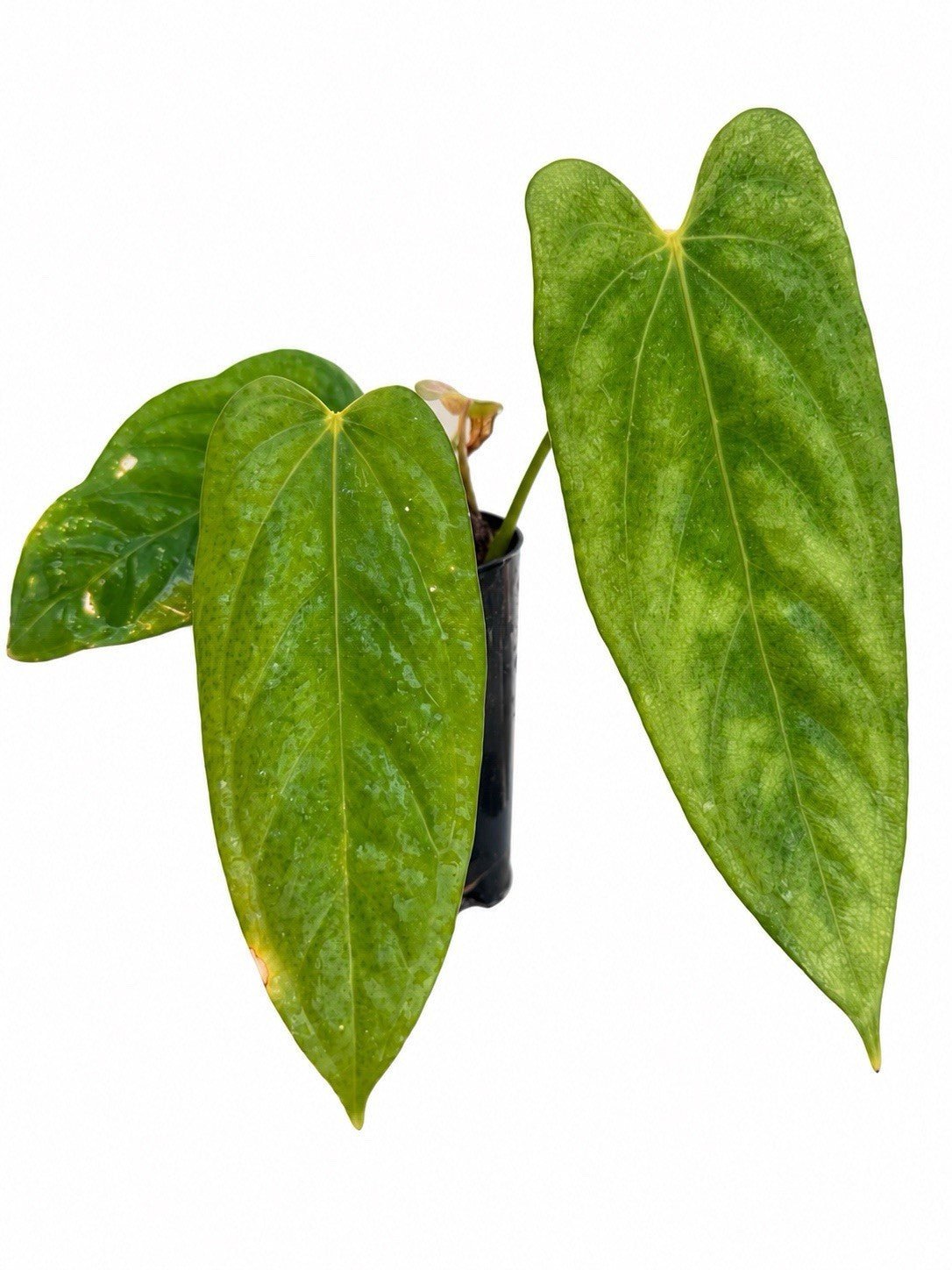
In general, Anthuriums appreciate bright indirect light, warm temperatures, moderate to high humidity and a well-draining aroid mix. Overwatering is a common cause of root problems, so water when the growing medium begins to dry rather than on a fixed schedule. The Anthurium Pap × Pap listing, for example, notes the same basic needs: bright indirect light, warm conditions and a well-draining mix.
A Buyer's Checklist for Hybrid Health and Appearance
Before you buy, work through this list:
- Parentage matches the label on the listing and the tag
- Plant is established, with healthy roots and multiple leaves
- Photos show the exact plant you will receive
- Leaf colour and venation are described as possibly changing with maturity
- Current size is stated and matches the photos
- Seed-grown or clone status is clear
- Packaging and shipping to your state are confirmed
Take a look at the Anthurium antolakii 'BVEP' × RVDP listing, which states that the plant currently shows lighter, yellow-toned foliage with green veining. A listing that describes the current state clearly is one you can trust more. If you are weighing a pricier hybrid, read this honest buyer's guide before purchasing.
Choosing Your Next Anthurium Hybrid
Once you have scored your options, the right choice usually becomes clear. If you want a mature plant with large, dark foliage, the Anthurium 'Sombre' Black Venom × Pap is an established plant with active new growth. If you prefer a rooted collector hybrid at a lower price, the Anthurium Black Cherry × Pap × Dress shows dark green foliage and bronze-red new growth.
For a seed-grown option that suits a patient collector, our Anthurium Pap × Pap is an established juvenile with velvety foliage. Its leaves will change with age, which is part of the appeal for many collectors. You can also browse the full range of rare Anthurium hybrids in our store to find the plant that fits your collection.
Frequently Asked Questions
How do you compare Anthurium hybrid plants?
Start with parentage, then compare the plants on the same traits: leaf shape, leaf size, colour, texture and venation. Check whether each plant is seed-grown or a clone, and whether it is a mature plant or a juvenile. Photos of the exact plant you will receive matter more than parent photos, because a hybrid can look quite different from either parent. Keep notes on each listing so you can compare like with like rather than judging on the most striking photo.
What should I look for when buying an Anthurium hybrid?
Look for a clear parentage label, current photos of the exact plant, and a description of its size and growth stage. Check that roots and foliage look healthy and that the plant is well established. Read the seller's notes on variation, since a seed-grown hybrid is individual and its mature leaf colour and texture cannot be guaranteed. Confirm packing and dispatch details before ordering, especially for interstate delivery.
Do Anthurium hybrids have different care requirements?
Many hybrids share the general needs of their parent species: bright indirect light, warm temperatures, moderate to high humidity and a well-draining aroid mix. Differences show up in how fast a plant grows and how it responds to conditions, so a juvenile hybrid may need closer attention than a mature one. Water when the growing medium begins to dry and avoid waterlogged pots, which is the most common cause of root problems in aroids.

0 comments